



Contractor-Centric to Owner-Led: Moving Your Capital Program into Tenzing One
The Problem: Living in the GC’s System
Most owners today still manage major building and infrastructure programs using a mix of the general contractor’s project management software, spreadsheets, email, and shared drives. The GC’s platform is optimized for construction execution, submittals, field logs, daily reports—not for owner governance, board reporting, or long-term asset performance. As a result, owners receive reports, but they do not truly control the workflow, the data model, or perhaps most importantly the project record that will be scrutinized in the event of change orders, claims, disputes, public scrutiny or audit of any kind.
When projects drift off course, visibility weakens, risks surface late, and executives are forced into reactive explanations rather than proactive steering. In public and institutional environments, this creates real exposure in audits, FOIA responses, bond oversight, and litigation, because the official record is scattered across GC tools and inboxes.
Why Contractor Tools Fall Short for Owners
Contractor systems are built to make the builder’s life easier: organize trades, track production, and protect the GC’s contractual interests. They do not naturally reflect the owner’s broader responsibilities—capital planning, funding approvals, governance workflows, portfolio risk, and organizational accountability.
Common gaps for owners include:
- No single owner-side system of record for RFIs, change orders, approvals, and decisions across projects and programs.
- Does not address the wider responsibilities of the Owner to manage all non-bricks and mortar aspects of the total project such as Owner direct vendors, soft costs, intangible project risks and considerations such as utilities, community groups. All of which can impact total project budget schedule and quality.
- Limited portfolio visibility: leadership sees individual jobs, but not cross-program exposure, contingency erosion, or systemic schedule pressure.
- Governance lives in spreadsheets and email threads, creating version confusion, approval gaps, and difficulty reconstructing who approved what and when.
- Institutional knowledge sits in the heads of a few strong project managers rather than in an easily accessible searchable process spine.
In short, contractor tools manage construction; they do not govern the owner’s total role from early concept through handover and operations.
What It Means to Be Owner-Led
Becoming owner-led means your capital program runs from your own playbook, not borrowed from someone else’s workflow. In practice, that looks like:
- You define the workflow, milestones, and approval paths for every phase of the project lifecycle.
- You own the data and maintain an audit-ready record of RFIs, PCOs, change orders, decisions, and funding actions.
- You see financial exposure, schedule risk, and scope changes in real time at both project and portfolio levels.
- You capture and standardize institutional knowledge, so each new project does not start from scratch.
- You aware 24/7 of all project KPIs and if project goals are threatened can confidently take informed proactive steps to correct the situation
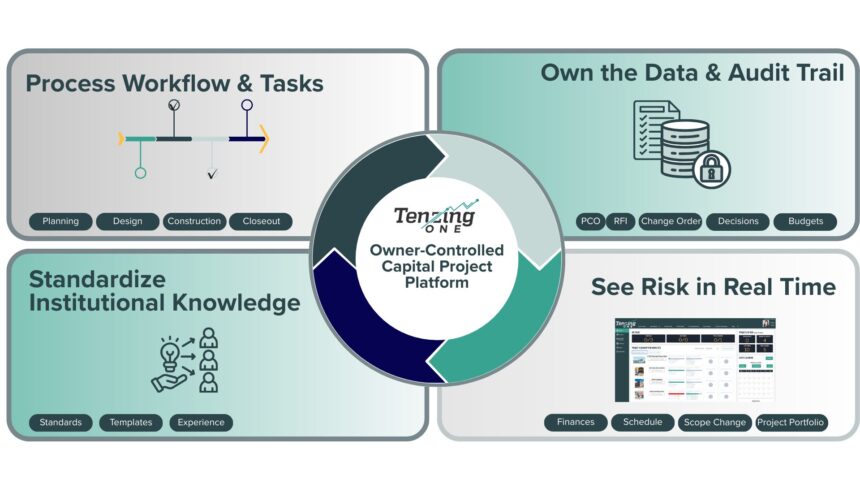
Tenzing One’s Process Map embodies this owner-led model: it breaks the entire capital project into clear, logical phases with defined tasks, responsibilities, and required information, from earliest idea through closeout and handover. Every task carries the associated documents, checklists, cost and schedule elements, and communication history, creating a single source of truth for the owner team.
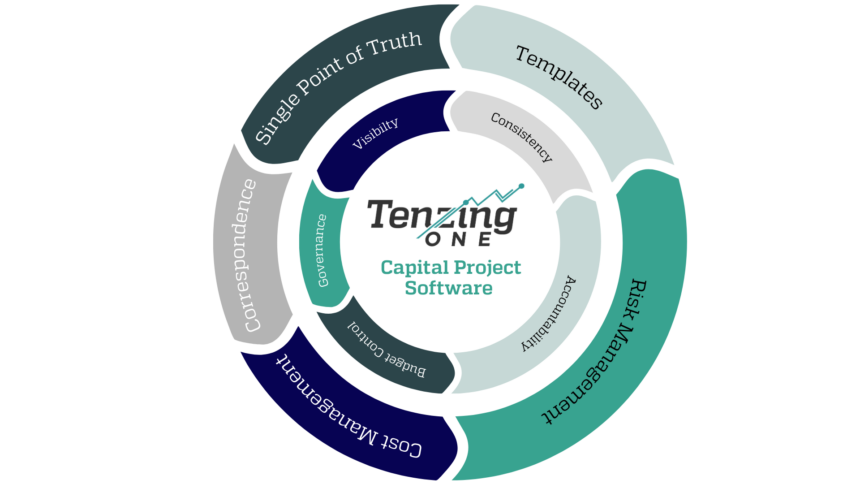
How Tenzing One Becomes the Owner’s System of Record
Tenzing One is structured as a capital project management system specifically for owners, not contractors. The platform and its Process Map give you a consistent, end-to-end workflow that maintains control over cost, schedule, quality, risk, and governance.
Key capabilities for an owner-led program include:
Structured lifecycle workflow
A pre-built process spine that ensures each project follows a consistent, proven sequence of tasks, with clear accountability and required inputs at every step.
Real-time cost and schedule visibility
Tools and dashboards that allow owners to track budgets, contingencies, and schedule risks proactively rather than discovering issues after the fact.
Embedded governance and approvals
Configurable workflows, approvals, and audit-ready logs so decisions are documented and defensible in audits, funding reviews, or claims.
Portfolio-level oversight
Dashboards that show exposure, risk, and progress across multiple projects, enabling leadership to manage bond programs, campus expansions, or multi-facility portfolios from a single vantage point.
Preservation of institutional knowledge
Standardized templates, checklists, and advisories that capture how your organization delivers projects, so performance does not collapse when key staff rotate
Because all documentation, RFIs, change orders, punch-list items, and approvals live in an owner-controlled environment, you maintain independence from contractor platforms while still collaborating with them effectively.
Practical Steps to Move from Contractor-Centric to Owner-Led
For owners considering this transition, it helps to treat “moving into Tenzing One” as a structured migration, not a big-bang switch.
Clarify your governance priorities
- Define what you must see at the executive level: cost exposure, schedule risk, key decisions, and portfolio status.
- Identify which approvals and decision trails must be audit-ready across every project.
Stand up Tenzing One as the system of record
- Configure the Process Map phases and tasks to match your internal governance model (funding gates, board approvals, design reviews, procurement checkpoints).
- Establish Tenzing One as the location of truth for budgets, RFIs, change processes, and owner approvals, even if the GC continues to use their own field tools.
Integrate GC and consultant workflows
- Define how data flows from the GC’s project management software into Tenzing One (e.g., RFIs, PCOs, change orders), so owner-side decisions and exposure are tracked centrally.
- Use Tenzing One to manage owner reviews, responses, and approvals, preserving a complete owner-side record of what was received, decided, and communicated.
Shift reporting and portfolio oversight into Tenzing One
- Move executive and board reporting to Tenzing One dashboards instead of slide decks assembled from multiple contractor reports.
- Use portfolio views to spot early drift in contingency usage, schedule float, and risk across programs.
Institutionalize the new playbook
- Capture lessons learned, refined checklists, and new governance requirements directly into the Process Map so each new project benefits from prior experience.
- Train internal teams and owner’s representatives to treat Tenzing One as the default environment for capital RFI tracking, change order management, punch lists, and schedule oversight.
By following these steps, owners move from simply “accessing the GC’s tool” to running a disciplined, owner-led capital program where Tenzing One serves as the single destination and dashboard for oversight. This shift does not replace contractor systems—it puts them in their proper place, while the owner finally controls the infrastructure that matches the level of accountability they carry.
About Tenzing One
For most Owners, adoption of a complex Process Management Information System tends to be daunting and impractical due to the long and often counter intuitive learning curve.
Tenzing One was developed by professional Owner’s Representatives to implement their day-to-day business. As such it was vital that the system could be implemented for instance by a new employee or Client within a common-sense practical time frame.
Typicaly Clients are using the system within a couple of hours and fully conversant using all functionalities within a week.
Tenzing One is effectively a fully inclusive, “one click” system. Fully inclusive means that you never need to leave the Tenzing One application for whatever you need. “One click means that the information you need for whatever you are working on is generally one click away
Tenzing’s embedded process, templates are all flexible and can be adjusted to reflect the Client’s familiar workflows and documentation. That said most users find the embedded Tenzing workflows and templates intuitive and familiar.
Reach out to info@tenzingone.com to learn more
